
Real Conversations · Masterclass

HR are having the conversations people managers are employed to do. This needs to change.
Your leaders care, and they're good at the work. But when someone is struggling, or needs to hear something hard, they step back and send the conversation to HR. Here's what that looks like in a normal week.
Mon
A manager forwards you an email. "Can you have a word with Sam? He's not himself."
Tue
An exit interview. The third this quarter where the real reason is "my manager".
Wed
A leader asks you to sit in on the performance conversation they've been putting off since March.
Thu
Someone has been "fine" for six weeks. Their manager noticed in week two and said nothing.
Fri
An exec stops you in the corridor. "What are we doing about all that?"
The week you want
Your leaders have the conversation themselves. You hear about it afterwards, because it went well.
The cost to your organisation
What avoidance is costing you this year
Every hard conversation a leader walks past shows up somewhere: a resignation, a claim, a team that goes quiet. Put in your number of people leaders and see the floor.
Cost of avoidance for 100 people leaders, every year
$362,737
to
$488,274
That's a floor, at $3,600 to $4,900 per people manager a year. It counts two costs only: staff turnover and workers' compensation claims. Absence, lost productivity and everything else are left out, so the real number is higher.
One hour to see where it's leaking, and what to fix first.
Save my placeSource: Real Conversations Workplace Report 2026 (n=714)
Who it's for
This hour is for you if...
Built for leaders in organisations of 500+
Your leaders hit their targets, but go quiet when someone is struggling or underperforming, and hope it sorts itself out.
Managers keep handing their people problems to HR: the team member who isn't coping, the performance chat put off for months.
You've paid for awareness days, Mental Health First Aid and leadership programs, and nothing changed on Monday.
You're being asked to prove you're managing psychosocial risk, and "we have an EAP" isn't the whole answer.
You need a business case your exec will actually sign, not another wellbeing line item.
Not for you if you want another awareness session. This hour is about what your leaders say and do in the moment.
Why it keeps happening
Your leaders don't avoid hard conversations because they don't care. Nobody showed them how.
Most of your leaders were promoted for being good at their technical role. Then someone in their team opened up, or needed to hear something hard, and your leaders had about ten seconds to respond, with no training for that moment. So they reach for whatever feels safest. Mitch calls these reactions the five characters.

Magician
Rushes to fix it so the feeling goes away.

Thief
"Same thing happened to me." Makes it about them.

Blind Optimist
"At least..." Silver-lines it before it's been heard.
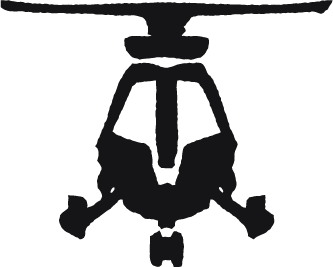
Helicopter
Gets swept up in it and carries it home.

Ostrich
Doesn't go there at all. The one HR hears about later.
Once your leaders can name them, they start catching themselves. That's a common language your whole leadership team can use the next morning.
It's not just your organisation
Australia has learned to listen. It hasn't learned to understand.
Most managers think they're doing the right thing. The people opening up to them tell a different story.
Managers who say listening is their first move
Employees who opened up to a manager and felt understood
Almost 7 in 10
employees who went through something significant in the last year never fully told their manager.
Much of what's going on never reaches the manager, or you, until it shows up as a resignation or a claim.
Almost 1 in 2
employees have taken action after a manager mishandled or avoided something personal.
27.8% took sick leave. 22.5% started looking for another job. 20.3% disengaged.
Only 1 in 4
first-line managers has had skills-based training in hard conversations. Yet 9 in 10 managers dealt with a significant personal issue in their team this year.
First-line managers are 61% of all people managers. Across every level, it's still fewer than 1 in 3.
Source: Real Conversations Workplace Report 2026 (n=714)
Inside the hour · 9.00-10.00am AEDT
Practical, not theory. Leadership, not a mental health 101.
Five parts, then your questions. Open any part for the detail.
9.00 01The job your leaders are avoiding, in one sentence
Name the exact conversations your leaders keep handing to HR, so everyone is solving the same problem.
9.05 02Find the cost of avoidance in data you already have
Exit comments, burnout and trust scores, and what keeps landing on your desk. Avoidance shows up there long before engagement moves.
9.15 03Why good leaders drop the ball in the ten seconds that matter
Why capable leaders freeze, fix or hand it off at the exact moment their team needs them most, and what's really going on for them in that moment. Once you can see it, you can build the skill.
9.35 04Why the training you've already funded hasn't changed behaviour
Why awareness days, peer support and Mental Health First Aid haven't shifted it on their own, where they still fit, and what actually builds the skill.
9.40 05Turn connection into a capability your exec will fund
How to make the case upstairs in their language, including as a psychosocial risk control. You leave with a one-page business case to fill in.
9.50 Your hardest people situation, answered
Bring the conversation your leaders keep avoiding. Mitch answers as many as time allows.
You'll leave with
A one-page case your exec will actually read
Built for the person who signs off but wasn't in the session. Fill it in afterwards and send it upstairs the same day.
Fill this in · The one-page case
The problem
Our leaders avoid
What it's costing us
The approach
How we'll know it worked
What happens next
It changes what leaders actually do
Law, construction, tech, healthcare and professional services. Hear it from the people who brought it in.
Property and construction
"The feedback is phenomenal, but I'm not surprised. Every leader I've spoken to that's attended has said the skills they've got are so transferrable - in work, at home, with whoever they're having a conversation with. That's where we had our biggest gap. So Real Conversations is really filling that for us."
Jane Gardner
Global Head of Wellbeing · Lendlease
Professional services
"Without a doubt, Real Conversations is our crown jewel when it comes to training. It's fundamentally shifted culture inside our workplace."
Lainie Cassidy
Head of Wellbeing · KPMG
Healthcare
"Mitch has delivered a learning & development program that actually changes behaviour, which is the core focus of what we are trying to do."
Liane Hernandez
Talent & Capability Manager · LifeHealthcare
Technology
"We're already seeing sentiment change. People are staying, and coming back to work at MRI, and they're putting it down to the program."
David Bowie
Managing Director · MRI Software
Law
"Some of our people have been working together for twenty years, and you hear stories in Real Conversations that they've never talked about with each other, but it's actually core to who they are."
Sam Turner
Chief People Officer · Allens
Your host
Mitch Wallis
Author of Real Conversations and creator of the framework behind it. Mitch has taught it to leaders in law firms, tech companies, construction sites and retail floors.
He holds a Masters in Psychology from Columbia University, spent seven years at Microsoft, and founded the charity Heart On My Sleeve. He has also sat on the other side of these conversations, which is why he teaches them the way he does.
10,000+
People trained
200+
Organisations
4
Continents

One hour. Spots limited.
Save your place
For People & Culture leaders who want their leaders having the hard conversations themselves.
That's 8am in Brisbane, 8.30am in Adelaide and 6am in Perth. Can't make it live? Register anyway and we'll send you the recording.
Date
Wed 18 November
Time
9.00-10.00am AEDT
Where
Live on Microsoft Teams
Cost
Free
We'll email your Teams link and a calendar invite.
Before you ask
Is it really free?
Yes. No cost and no card details.
Is this a sales pitch?
No. You get the full hour of content. At the end, Mitch will mention one way to go further, once.
Is it a mental health session?
It's a leadership session. It's about how your leaders handle the conversations they're currently avoiding, and how you build that as a capability.
We already run leadership and difficult conversations training. Is this different?
Most leadership programs skip the first ten seconds of a hard conversation. That's what this session is about. It starts with how a leader stays steady, not with a script, and it sits alongside what you already run.
Will I be put on the spot?
No. There's no role-play and nobody gets picked on. Keep your camera off if you like, and ask questions in the chat.
Do I need to prepare anything?
No. To get more from it, have your latest engagement, pulse or exit data to hand for part two.
How do I join?
Your Teams link and calendar invite arrive by email once you register. Join from the Teams app or your browser.
Can I bring a colleague?
Yes. It helps to bring the person you'll need on side, whether that's another People leader or the exec who signs off. Each person registers separately so they get their own link.
What if I can't attend live?
Register anyway. Everyone who registers gets the recording.